Odinga & another v Independent Electoral and Boundaries Commission & 8 others


The bottom line
#Court refused to strike out affidavits in a presidential election petition, saying it was too early.
What this practically means
#The Supreme Court of Kenya dismissed an application to remove three affidavits from a presidential election petition. The person who filed the application argued the affidavits contained hearsay and should be thrown out. The court said it was premature to strike them out because the other side had already responded to the facts in those affidavits. The court wants to see all the evidence first before deciding what is admissible.
Executive summary
#Questions the Court framed
#The issues the Court set itself to decide, in its own words.
- 1.Whether the affidavits in support of the petition sworn by John Mark Githongo, Benson Wesongo, and Martin E Papa should be struck out as inadmissible hearsay.
- 2.Whether paragraphs 64, 69, and 115 to 127 of the petition should be expunged.
Key legal issues
#Whether affidavits containing hearsay material should be struck out at a preliminary stage.
The court declined to strike out the affidavits, holding that it is premature to do so when responses are already on record and the court should consider the totality of evidence.
The court noted that the affidavits contain factual contestations that have been substantively responded to by the 1st respondent and the applicant. The court should be allowed to consider all evidence and discern probative value guided by rules of evidence. Striking out in isolation is premature.
Whether specific paragraphs of the petition should be expunged as beyond the purview of a petition under Article 140 of the Constitution.
The court deferred the issue, stating it can only be dealt with on merits when raised in each impugned instance.
The court recognized its circumscribed jurisdiction under Article 140 and as an election court regarding potential electoral and other offences. It declined to rule on the expungement at this preliminary stage, leaving it to be addressed appropriately later.
Legal principles established
#- Courts should not strike out affidavits early in a case if the other party has already responded to the facts.
- A request to remove specific paragraphs from a petition must be decided on its own merits when the issue actually arises.
- The court must consider all evidence together before deciding what is admissible or not.
- Striking out evidence in isolation, while leaving responses on record, is premature.
- The court's jurisdiction under Article 140 of the Constitution is limited and must be respected.
Court orders
#- 1.The notice of motion application dated and filed on August 27, 2022 be and is hereby disallowed.
- 2.There shall be no order as to costs.
The bench
#One judgment of the whole court — no separate or dissenting opinions.

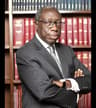
Wrote the judgment





- Jurisdiction invoked
- Article 163(3)(a) of the Constitution of Kenya
Relief refused
#Striking out the affidavit of John Mark Githongo sworn on August 21, 2022
Striking out at this early juncture is premature; the court should consider the totality of evidence.
Striking out the further affidavit of Benson Wesongo sworn on August 21, 2022
Same as above; premature to strike out before full consideration.
Expunging paragraphs 64, 69, and 115 to 127 of the petition
This issue can only be dealt with on merits as and when it is made in each impugned instance.
Costs
There shall be no order as to costs.
Quotable passages
#Verbatim from the judgment, each located to the page it appears on in the official PDF — so these can be cited and checked directly.
Striking out of the affidavits at this early juncture in isolation while leaving the responses on record, in our view, is premature under the circumstances.
we note that it is an issue that can only be dealt with on merits as and when it is made in each of the impugned instances.
The notice of motion application dated and filed on August 27, 2022 be and is hereby disallowed.
There shall be no order as to costs.
Key timeline
#Practical implications
#Delay striking-out motions until full record
Do not file preliminary objections to strike out affidavits based on hearsay if the opposing party has already filed responses. The court will likely dismiss such motions as premature. Instead, wait until the hearing to challenge specific evidence on admissibility or probative value.
Prepare for full evidentiary review
If you are involved in election-related litigation, expect the court to consider all evidence filed, even if some appears questionable. Do not rely on early dismissal of weak evidence. Ensure your own affidavits are properly sworn and based on personal knowledge to avoid later challenges.
Your affidavit may survive early attack
If you swear an affidavit in a court case, the other side cannot easily get it thrown out before the main hearing, especially if the other party has already responded. The court will wait to see the whole picture. But your affidavit must still be truthful and based on what you personally know.
Frequently asked questions
#Can an affidavit be struck out for hearsay in a Kenyan election petition?+
Not at an early stage if the other side has already responded. The Supreme Court said it is premature to strike out affidavits in isolation. The court will consider all evidence together and decide what is admissible later.
What is the procedure to remove paragraphs from a petition in Kenya?+
You must raise the objection at the specific time the paragraph is being considered, not as a preliminary issue. The court will decide on the merits of each challenged paragraph when it becomes relevant.
Does the Supreme Court have unlimited jurisdiction in presidential election petitions in Kenya?+
No. The court's jurisdiction is circumscribed by Article 140 of the Constitution. It can only deal with matters within that limited scope, such as whether the election was conducted in accordance with the law.
What happens if I file a weak application to strike out evidence in Kenya?+
The court may dismiss it with no order as to costs, meaning each party pays their own legal fees. You waste time and resources. It is better to wait and challenge the evidence during the main hearing.
Cite this brief
#Cite this brief
Caselaw, "Odinga & another v Independent Electoral and Boundaries Commission & 8 others", Case Analysis (2022). Presidential Election Petition 5 of 2020. Source: https://new.kenyalaw.orghttps://new.kenyalaw.org/akn/ke/judgment/kesc/2022/47/eng@2022-08-29
Suggested citation format for research notes or client memos. Always verify the original judgment before relying on any point.